
AFFORDABLE HOUSING

Affordable Housing in Hawaii
Every local family in Hawaiʻi knows someone who left.
Affordable Housing in Hawaii
Our keiki shouldn't have to move 2,500 miles away to afford a roof over their heads.
Every local family in Hawaii knows someone who left.
A cousin in Las Vegas. A classmate in Washington. A sister in Texas who calls on Sunday and says the house she just bought cost less than the down payment would have here. They didn't want to leave. They loved it here. They just ran the numbers.
Between 2020 and 2025, Hawaiʻi lost more than 22,000 residents. In a single year, nearly 8,900 more people moved to the mainland than moved here. We are not losing tourists. We are losing neighbors the nurses, the framers, the teachers, the guys who fix your truck.
There is nothing inevitable about this. Hawaii has a housing shortage because Hawaii decided, one rule at a time, to make housing nearly impossible to build. That decision can be unmade.
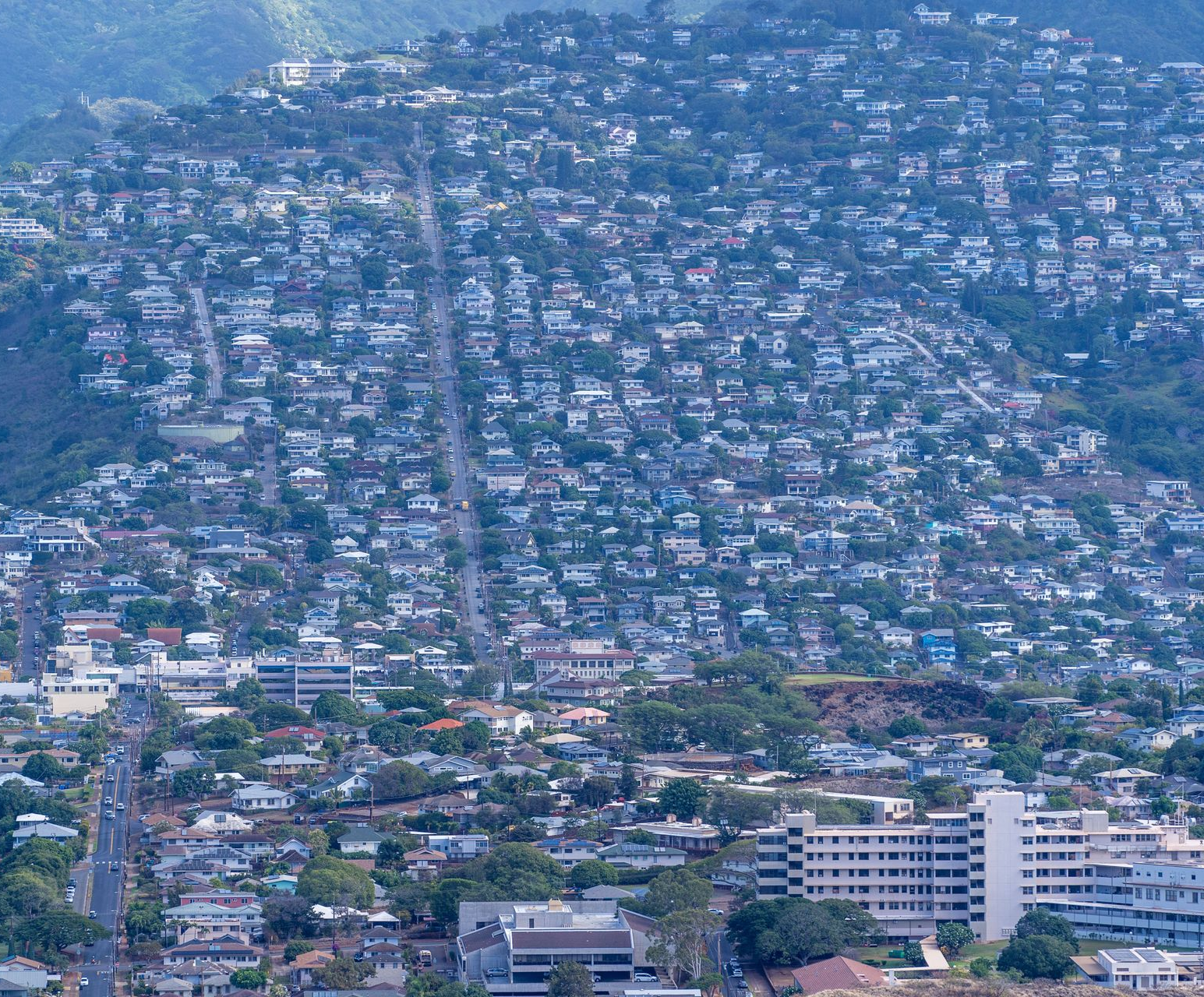
At a glance
What housing actually costs in Hawaiʻi right now
Why is housing so expensive in Hawaiʻi?
• The median single-family home on Oʻahu sold for $1,122,500 in early 2026.
• Buying a median-priced single-family home in this state requires a household income of more than 180% of the state median income.
Hawaii needs roughly 65,500 additional housing units statewide by the end of 2027 just to meet existing demand.
The state has historically needed about 10,000 new units a year and has averaged closer to 4,000.
Read that last line again. We have been falling behind by six thousand homes a year, every year, for decades. The shortage didn't sneak up on anyone. It was permitted or rather, it wasn't.
Politicians here will tell you it's because we're islands. Land is finite, shipping is expensive, and there's nothing to be done.
Half true. Geography raises the floor. Government raises the ceiling.
The permit line is the crisis
In the first half of 2025, the median wait for a single-family building permit in Honolulu was 394 days. For multi-family, it was 585 days more than a year and a half before a single nail goes in. Hawaiʻi's permit processing runs more than triple the national average, and roughly twice as long as the most heavily regulated mainland markets.
Every one of those days costs money. Carrying costs on land. Interest on pre-development loans. Architects redrawing plans to satisfy the ninth reviewer. All of it lands in the final price of the home the one a young family in Wahiawā is trying to qualify for.
We regulate more than anyone else in America
Hawaiʻi carries the heaviest housing regulatory burden of any state in the nation. Not one rule. Thousands, stacked up over fifty years, each one defensible on its own and ruinous in aggregate. Layer county zoning on state land use law on special management area review on impact fees on the General Excise Tax — and then act surprised when only luxury projects pencil out.
When you make it legal to build only expensive housing, you get expensive housing. That's not a market failure. That's the policy working exactly as written.
One party has run this state for sixty years
Hawaiʻi's housing crisis has been declared an emergency by the same political establishment that presided over its creation. There have been proclamations, task forces, working groups, and studies. Median prices went up anyway. Our population went down anyway.
At some point, accountability has to mean something. If a party holds the Governor's office, both chambers, and nearly every county seat for two generations and housing gets less affordable the entire time, the problem isn't a lack of good intentions. It's a lack of competition.
Our plan to make housing affordable in Hawaiʻi
We don't need another study. We need to build. Here's what Hawaiʻi Republicans will fight for:
Put a shot clock on every permit
- Set hard statutory deadlines for county permit review 60 days for residential, 120 days for multi-family. If the agency misses the deadline, the permit is deemed approved. Government should be held to the same schedule it holds you to.
2. Make ʻohana units legal by right
Families have been building ADUs and ʻohana units for generations. Legalize them by right statewide on any lot with adequate infrastructure no discretionary review, no neighborhood veto, no two-year odyssey. This is the fastest, cheapest housing Hawaii can add, and it keeps three generations on the same property.
3. Stop taxing the homes we say we need
Exempt genuinely affordable housing projects from the General Excise Tax and from stacked school, park, and wastewater impact fees. Taxing affordable housing construction and then subsidizing affordable housing construction is a bureaucratic merry-go-round that only the bureaucracy enjoys.
4. Build the infrastructure that unlocks the land
Sewer and water capacity, not land, is the binding constraint in most of urban Oahu. Prioritize state infrastructure dollars toward capacity that unlocks thousands of housing units instead of toward projects that unlock headlines.
5. Clear the Hawaiian Home Lands waitlist
Thousands of beneficiaries have waited decades — some have died waiting. Fund infrastructure on existing DHHL parcels, cut the approval chain, and treat the waitlist as the moral obligation it is rather than a line item to be deferred another session.
6. Audit every rule for what it costs a family
Require an independent cost-of-housing impact analysis on every proposed land use and building regulation, published before the vote. Sunset rules that add cost without adding safety. If a rule can't justify what it adds to a mortgage payment, it goes.
7. Put local buyers first
Strengthen owner-occupant protections and preferences in new developments so homes built in Hawaiʻi go to people who live in Hawaiʻi — not to investors treating our neighborhoods as an asset class.
What this means for your ʻohana
A permit issued in 90 days instead of 394 is roughly a year of carrying costs stripped out of the price of a home. An ohana unit legalized by right is a grandmother who stays on the property instead of in a facility, and a grandson who stays in Hawaiʻi instead of in Henderson. Sixty-five thousand units built is a rental market where the landlord competes for you.
This is not ideology. It's arithmetic. Supply goes up, prices come down, and our people stay home.
Hawaiʻi can be affordable again. It takes a Legislature that wants it to be.
Why is housing so expensive in Hawaii?
Limited land and shipping costs raise the baseline, but the biggest controllable driver is regulation. Hawaiʻi has the heaviest housing regulatory burden in the country, and Honolulu's median single-family permit wait ran 394 days in the first half of 2025 — more than triple the national average. Those delays and fees are passed directly into the price of every home.
How much do you need to earn to buy a house in Hawaii?
Affording the median-priced single-family home in Hawaiʻi requires a household income exceeding 180% of the state's median household income, according to UHERO's 2026 Housing Factbook. On Oʻahu, where the single-family median ran about $1.12 million in early 2026, the qualifying income is higher still.
How many homes does Hawaii need to build?
The Hawaiʻi Housing Finance and Development Corporation estimated nearly 65,500 additional units are needed statewide by the end of 2027. The state has historically needed roughly 10,000 new units annually while averaging closer to 4,000.
Is Hawaii losing population because of housing costs?
Hawaiʻi's population fell to 1,432,820 as of July 2025 — down about 22,400 from the 2020 census base — driven overwhelmingly by residents moving to other states. Roughly 8,900 more people left for the mainland than arrived in a single year.
What is the Hawaii Republican Party's plan for affordable housing?
Hard deadlines on permit review with automatic approval if government misses them; legalizing ʻohana units and ADUs by right; exempting affordable housing from the GET and stacked impact fees; prioritizing sewer and water infrastructure that unlocks housing; clearing the Hawaiian Home Lands waitlist; requiring a published cost-of-housing analysis on every new regulation; and strengthening owner-occupant preferences for local buyers.